

Forests in western Scotland can develop into temperate rainforests through the slow accumulation of special species over decades or even centuries. This includes lichen epiphytes that characterise Scotland’s temperate rainforest habitat. Scotland’s rainforests are under threat from fragmentation, overgrazing, and invasive species such as Rhododendron ponticum. We can conserve this unique habitat by protecting its existing distribution and encouraging its expansion. Understanding how temperate rainforest biodiversity spreads is, therefore, extremely important. How far can these lichen species disperse across landscapes? Also, how far can they spread into forests, depending on different forest densities and structures? Olivia Gray from the Royal Botanic Garden Edinburgh is researching these issues using air samplers to detect airborne lichen particles, assessing how well this new technology can monitor terrestrial biodiversity.
Lichens are a symbiosis between a fungus and an algal or bacterial photobiont (sometimes both!). They are characteristic of temperate rainforests, playing a key role in interactions with other species and as indicators of climate and air pollution. Nowadays, western Scotland is considered a last stronghold for Europe’s temperate rainforest, home to many globally rare lichen species. Conserving this habitat is therefore crucial for conserving global lichen diversity and abundance.
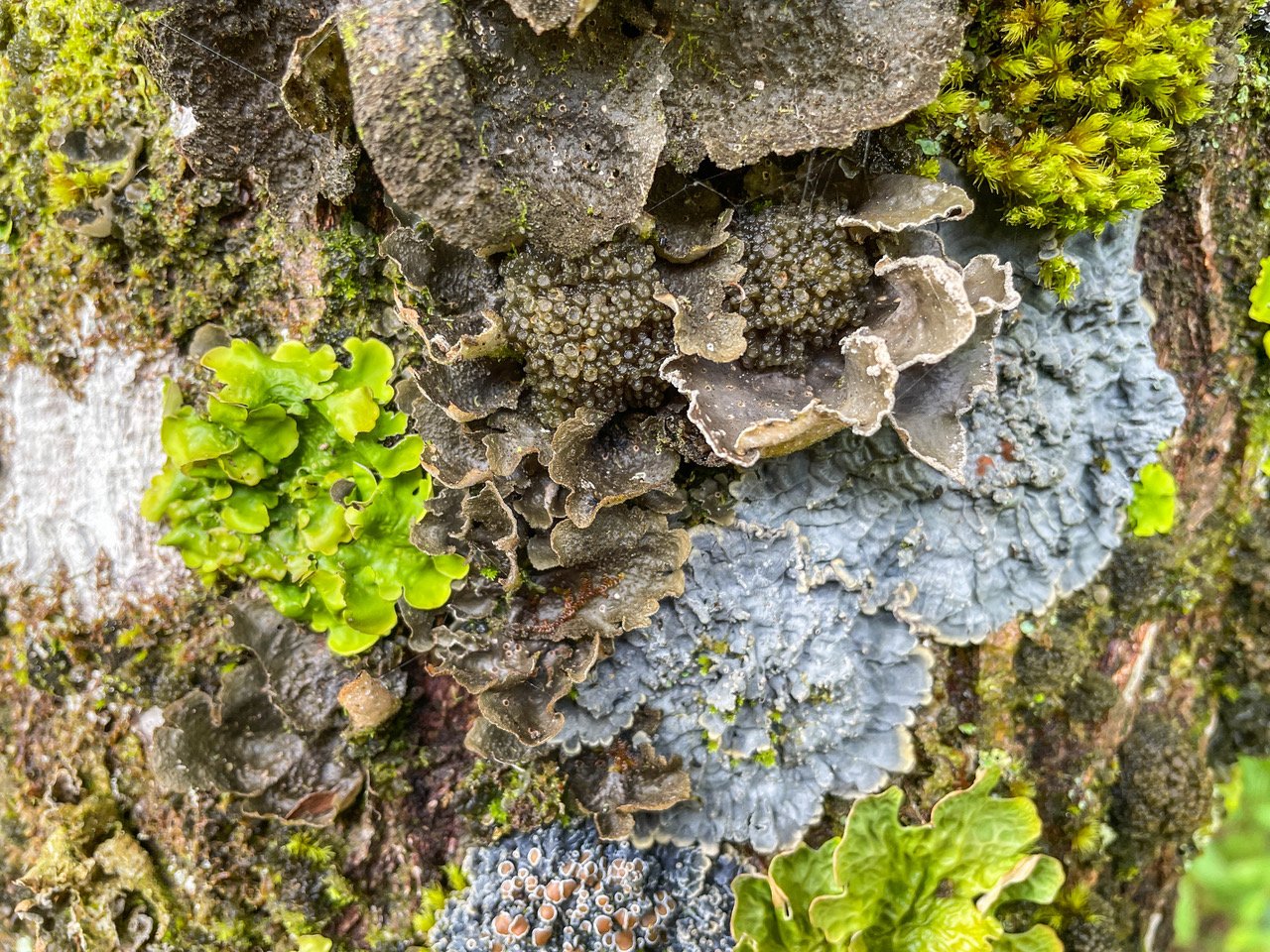
Credit Laura Corbe
Lichens travel via spores or vegetative propagules, which disperse through the air and settle, potentially forming a new individual lichen. They are thought to rely mainly on airborne dispersal to colonise new habitat. This means the same forces influencing airborne particles also affect the fate of lichen spores and propagules, and the connectivity of lichen populations.
Environmental DNA (eDNA) involves extracting DNA from environmental samples, such as water, air, or soil. Airborne eDNA can be collected from passive or active air samplers. Active samplers process more air, but are typically expensive.
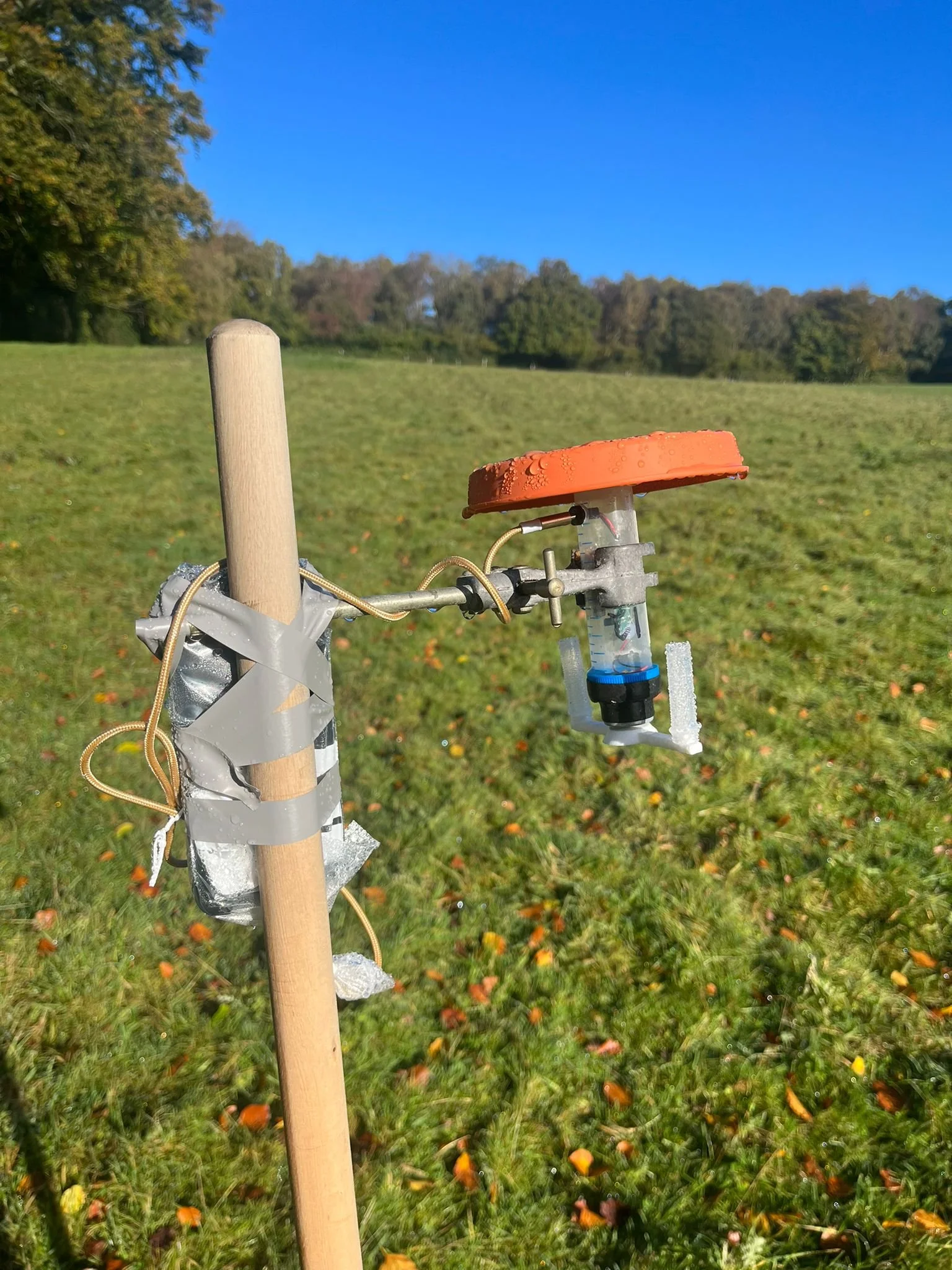
An AberTrap sampler
Aberystwyth University’s mycology department has developed lightweight AberTrap air samplers which each cost under £100 and can be built DIY with minimal training. They use a rotation-impaction system, with acrylic paddles coated in petroleum jelly to trap airborne particles. This approach offers an opportunity to detect airborne particles – including lichen spores and propagules – in an affordable and efficient way.
Once DNA is extracted from samples, there are some options for detecting which species are present. Metabarcoding is a DNA sequencing method that allows the detection of many species in one sample.
Although often used for environmental samples, metabarcoding can be biased, through over-sequencing of some species relative to others in the sample. This means some species can be ‘drowned out’ due to their lower abundance or weaker complementarity with primers, for example. Metabarcoding may therefore not be suitable for focussed lichen dispersal studies, and still requires testing and validation. The JNCC have published a detailed guide on metabarcoding if you are interested in learning more.
One part of my project aims to compare metabarcoding methods with high-sensitivity species-specific primer methods already used successfully in lichen dispersal studies. I will compare presence-absence species data between the two methods for samples from one of the first airborne eDNA studies conducted by Sally Eaton during her PhD. If the species we already know to be present in these samples are detected using metabarcoding methods, we will know that metabarcoding works for lichen dispersal studies. These results will affect future lichen dispersal research and potentially validate metabarcoding methods for broader applications.
One of my dispersal studies addresses how lichens colonise new forests. This is based on paired sites – one ancient woodland stand and a recently planted stand. Forest Research are surveying lichens at such sites to assess the extent of lichen colonisation into the young woodlands. I will sample the air at the same sites to observe spores and propagules travelling between the paired stands. The presence-absence species data from the air samples will be used to generate dispersal kernels for a few target species and the whole lichen community, based on species richness and abundance.
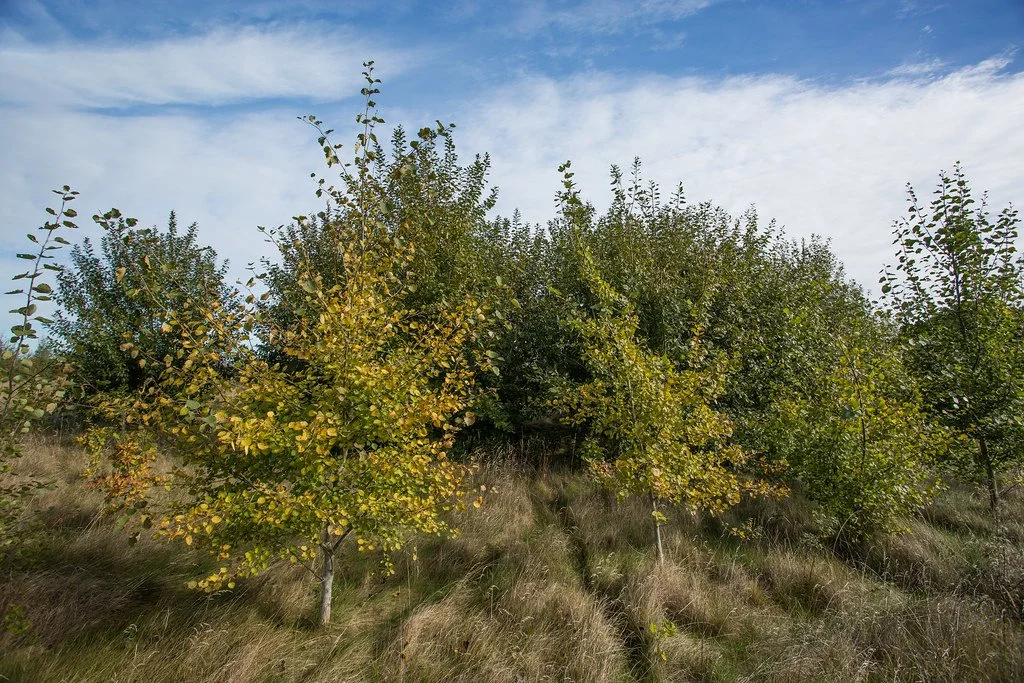
Credit Judith Parry
This experiment tests the hypothesis, proposed by Gjerde et al. (2015), that dispersal kernels do not occur at landscape scales. The idea is that spores and propagules disperse in from many distant sources, drowning out any local dispersal signal. This study’s results could inform rainforest management, helping determine where to plant new rainforest habitat. If propagule densities are largely homogenous at landscape scales, new habitat does not need to be close to existing propagule sources like ancient woodlands. However, if dispersal kernels are observed at landscape scales, planting closer to existing propagule sources may improve the likelihood of successful lichen colonisation.
Finally, it is important to consider dispersal distances within forest stands. For example, do denser forests obstruct dispersal into a new habitat? This study will be based on a focal tree next to a dense forest made up of different tree species. Lichen species found on the focal tree but absent from the adjacent forest will be detected using air samplers to see how far into the dense forest they can be detected. Then, in collaboration with Forestry and Land Scotland, the forest will be thinned, and sampling will be repeated to see if dispersal distances increase. The rationale is that forest thinning, a common forest management method, may improve dispersal and establishment of lichens into suitable habitat in regenerating forests.
An interesting aspect of dispersal is that whether a particle hits an obstacle depends on windspeeds, the particle size, and the size of the obstacle. Faster winds give airborne particles greater momentum, increasing the likelihood of impaction. Larger particles will also have greater momentum and a higher likelihood of impaction. Narrow obstacles like thin tree branches are more likely to be impacted – one experiment by Carter (1965) showed that leaf stalks of trees trapped more spores than the branch stems. This is because thicker cylinders deflect more air, carrying airborne particles around the obstacles. Therefore, the effect of forest density might also depend on the lichen spore and propagule sizes, and potentially tree species and age (often a function of size).

Credit Gordon Willoughby
In summary, airborne eDNA is a promising method for understanding dispersal of temperate rainforest biodiversity. However, further validation and testing is required for applications, including lichen dispersal studies. This project focusses on what kind of distances lichens can disperse from source populations to newly planted habitat. It also explores what kind of planting densities or thinning regimes might be ideal for enabling lichens to colonise into new habitat.
If you have any questions or ideas to discuss regarding this project, please contact Olivia at ogray@rbge.org.uk
References and further reading
Alliance for Scotland’s Rainforest (2019) ‘The state of Scotland’s rainforest’.
Introduction to Modern Mycology – J.W. Deacon, 1984
Carter, M.V. (1965) ‘Ascospore deposition in Eutypa armeniacae’, Australian Journal of Agricultural Research
Eaton, S. et al. (2018) ‘A method for the direct detection of airborne dispersal in lichens’, Molecular Ecology Resources, 18(2), pp. 240–250.
Eaton, S. (2018) ‘Achieving landscape-scale conservation for Scotland’s rainforest epiphytes’. PhD thesis. Available at: https://theses.gla.ac.uk/8854/7/2018EatonPhD.pdf.
Gjerde, I. et al. (2015) ‘Lichen colonization patterns show minor effects of dispersal distance at landscape scale’, Ecography, 38(9), pp. 939–948.
Preston, M., Fritzsche, M. and Woodcock, P. (2022) ‘Understanding and mitigating errors and biases in metabarcoding: an introduction for non-specialists’.
Runnel, K. et al. (2024) ‘Aerial eDNA contributes vital information for fungal biodiversity assessment’, Journal of Applied Ecology, 61(10), pp. 2418–2429.
